


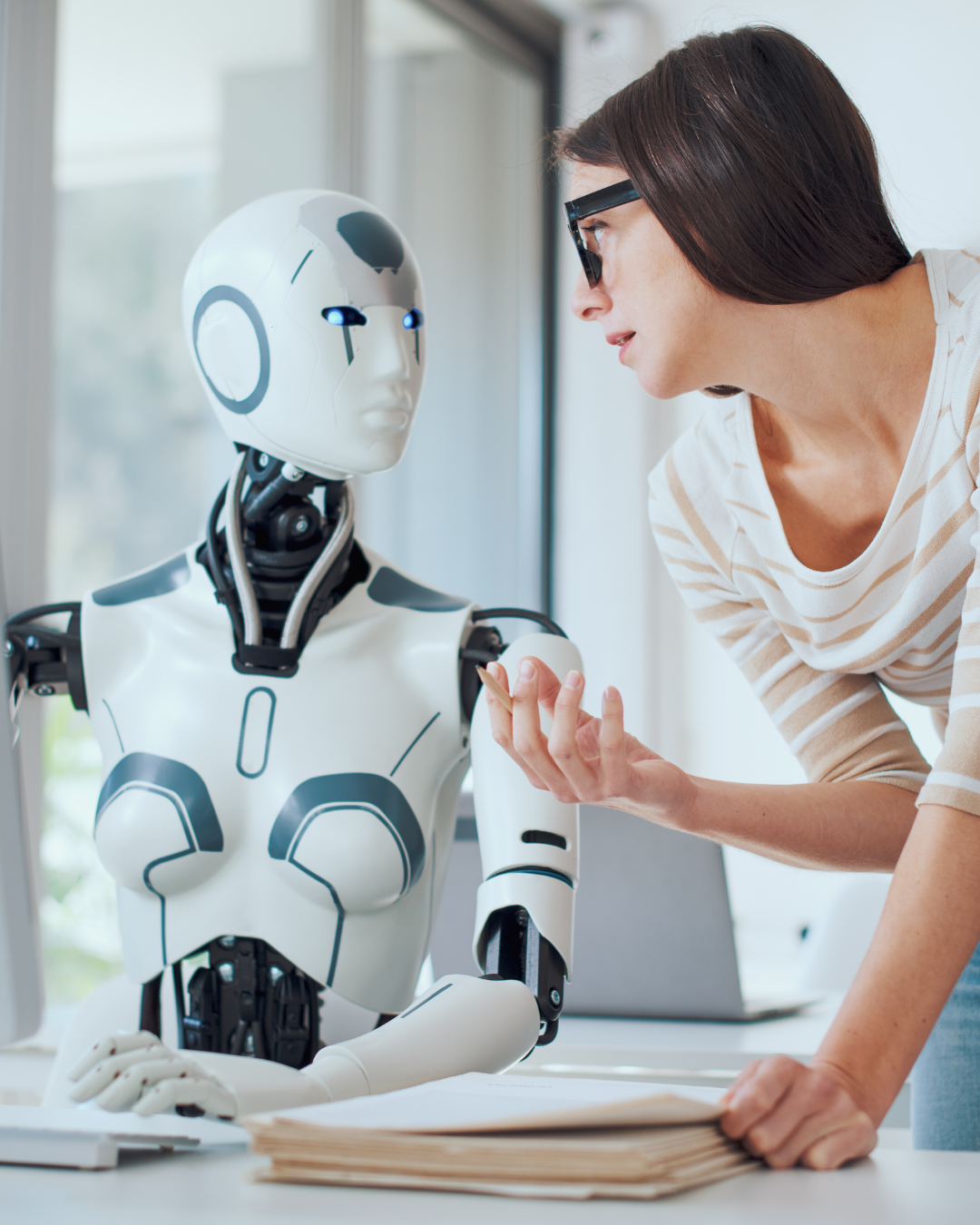
It’s Sunday night. You’re sitting on the couch, and your partner says something that completely stings. Instantly, your chest tightens, your stress level flares up, and you want to snap back, or completely shut down. Instead, you open a browser tab, navigate to an AI chatbot, and type: “My partner said something that really hurt my feelings, but I don’t know how to phrase my response without sounding defensive. Can you write a draft?”
If you have ever used Artificial Intelligence to help navigate a high-stakes, emotionally charged relationship moment, we want to tell you something clearly: this is completely normal. Wanting a second opinion when your emotions are running high is a healthy instinct. It shows that you care deeply about your relationship, that you want to avoid an explosive fight, and that you are trying to find a constructive way forward. AI can be a great tool to help de-escalate your initial impulse to strike back. It can spit out a perfectly structured script using text-book communication strategies.
But as human beings living in a deeply nuanced world, we have to talk about why a digital script is rarely enough to heal a human connection.
Why AI is Not Enough for Emotional Healing
While an algorithm can provide a beautifully polished paragraph, it falls short the moment the words leave your mouth. Here is why technology cannot replace the organic, human element of relational repair:
1. AI Cannot Predict Stress Responses
An AI cannot predict how your partner will react to that “perfectly phrased” script, nor can it anticipate your own internal reaction when they reply. If your partner is running on empty, overwhelmed by work, or dealing with their own invisible burdens, even a flawless script might be met with defensiveness. Furthermore, AI cannot feel your heart racing or help you regulate your nervous system when the conversation deviates from the program.
2. Meaning-Making Extends Far Beyond Words
Humans are hardwired for complex meaning-making. We don’t just interpret raw data; we digest tone, micro-expressions, sighs, posture, and the heavy silences in between the syllables. The environment matters, too, a conversation held while washing the dishes feels entirely different than one held face-to-face in a quiet room. AI only analyzes text; it cannot account for the symphony of non-verbal cues that turn a clinical script into a genuine human apology or confrontation.
3. AI Cannot Map Out Emotional Wounds
When a comment hurts your feelings, it is rarely just about the words spoken in that exact moment. It often brushes against an invisible, historical emotional wound, perhaps a fear of abandonment, a past trauma, or a feeling of never being “good enough.” An AI cannot trace the root of your triggers or understand the historical context of your relationship dynamic. True repair requires looking beneath the surface of the script to understand why the words hurt so deeply in the first place.
Moving From Scripts to Real Connection
Scripts give us a temporary sense of control, but real intimacy requires us to step into the messy, unpredictable space of human vulnerability. If you are struggling to communicate your hurts and desires to your partner, you don’t have to figure it out alone.
At The Healing Collective (2005 Danforth Ave), we provide a warm, collaborative space right here in the East End of Toronto to help you unpack relationship patterns, heal old wounds, and learn how to speak from the heart rather than a screen.
Here are three incredible practitioners from our collective who specialize in helping individuals and couples navigate the complexities of communication and relationships:
-
Tobi Baker (Registered Social Worker, Psychotherapist): Tobi brings a collaborative, compassionate approach to family and individual therapy. Utilizing Attachment and Emotion Focused Therapies, she helps clients understand where their emotional patterns come from and how they impact day-to-day communication.
-
Janine Cole (Registered Psychotherapist): Janine specializes in relationship challenges, life transitions, and grief. Her approach is authentic, down-to-earth, and grounded in Gestalt therapy, helping you explore patterns and strengthen your inner resources to communicate with confidence and self-awareness.
-
Susan Anstice (Registered Social Worker, Psychotherapist): Susan offers a supportive space to navigate relationship stress, life transitions, and feeling overwhelmed. She works collaboratively with clients looking for new perspectives and practical coping strategies to move forward constructively.
If you’re ready to trade the digital drafts for genuine, lasting relational healing, reach out to us at The Healing Collective. Let’s sit down, explore what’s happening beneath the surface, and find your authentic voice together.